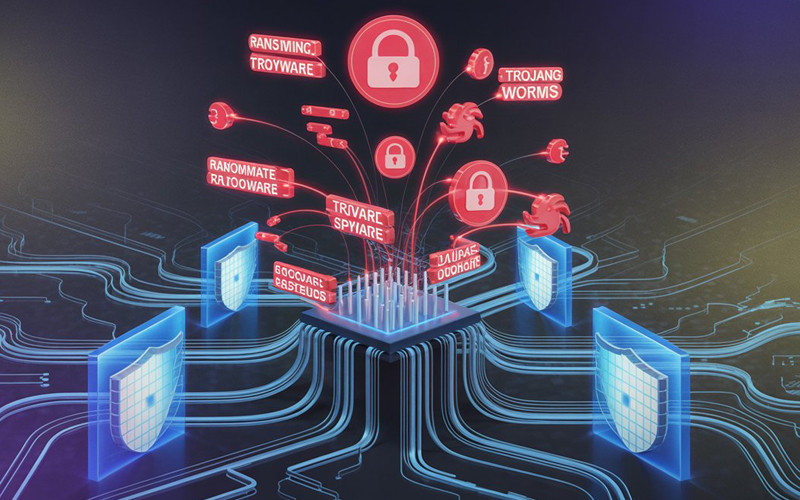
Explore the most common types of malware including ransomware, trojans, and spyware, and learn how malware analysis helps security teams detect and stop them.
Common Types of Malware and How Experts Analyze Them
Malware comes in many different forms, and each type behaves differently. Some malware focuses on stealing information, while others disrupt systems or lock important files.
Understanding these threats is an important step in building strong cybersecurity defenses.
Ransomware
Ransomware is one of the most damaging types of malware. It encrypts files or entire systems and demands payment in exchange for restoring access.
During malware analysis, experts study how the ransomware encrypts files, how it spreads across networks, and whether it communicates with external servers.
This information can help security teams develop detection rules and protect other systems from similar attacks.
Trojans
Trojans disguise themselves as legitimate software. Once installed, they can give attackers remote access to the infected system.
Malware analysts investigate how trojans hide within applications and what actions they perform after installation. This helps security teams understand the full scope of the threat.
Spyware
Spyware is designed to monitor user activity. It may record keystrokes, capture screenshots, or collect browsing information.
Because spyware often runs quietly in the background, malware analysis is necessary to detect the data collection process and block unauthorized transmissions.
Worms
Unlike many other malware types, worms can spread automatically through networks without requiring user interaction.
Malware analysis helps identify how a worm moves from one system to another, allowing organizations to isolate infected machines and stop the spread quickly.
Why Malware Analysis Is Important
Without proper analysis, security teams might remove malware but miss the larger problem. Malware analysis reveals the entire attack chain.
It helps experts understand how the malware entered the system, what vulnerabilities it exploited, and how to prevent similar attacks in the future.
Building Stronger Cybersecurity
Every analyzed malware sample provides valuable intelligence. Security researchers use this information to improve detection systems, update threat databases, and develop better defensive strategies.
For businesses, this knowledge strengthens long-term cybersecurity protection.
Conclusion
Malware continues to evolve as attackers develop new techniques. Malware analysis helps security professionals stay ahead by studying threats in detail and improving defensive measures.
Organizations that invest in malware analysis gain deeper visibility into threats and stronger protection against future cyber attacks.